
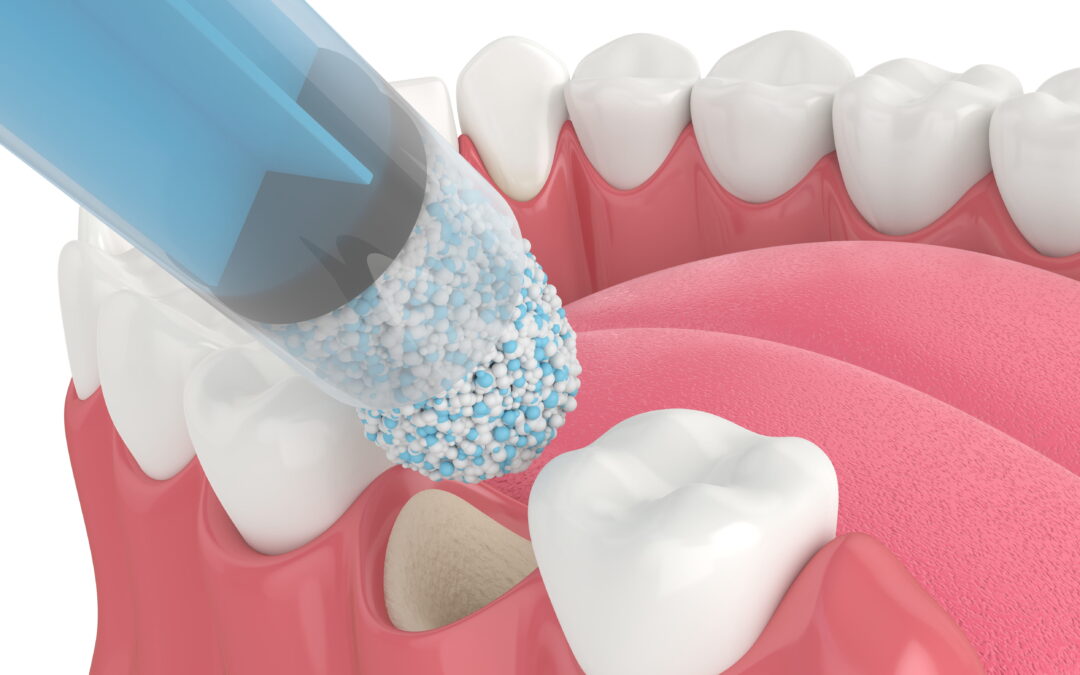
Short version: if you might replace the tooth with an implant, a bridge, or a partial denture, a bone graft is often worth doing at the time of the extraction. If you already know you will leave the space alone, you probably do not need one.
The one-sentence answer. A bone graft after tooth extraction is a small procedure that fills the empty socket with graft material so the jawbone keeps its shape while it heals. It matters most if you plan to place a dental implant later, and matters less if you do not.
What to know
- Bone starts to shrink as soon as a tooth is removed. Most of that loss happens in the first 6 months.
- Placing graft material into the socket at the time of extraction is called a socket preservation graft. It is a same-visit add-on to the extraction, not a separate surgery.
- Implants need enough width and height of bone to hold them. A socket graft keeps future implant options open without a second, larger bone-building procedure later.
- If the extraction site sits under a future bridge, a graft can also protect the shape of the gums so the bridge looks natural.
- Some patients reasonably choose to skip the graft. That fits when the tooth will not be replaced, or the space is not visible. It is a legitimate choice to discuss with your dentist.
Why teeth loss changes the jawbone
Roots of teeth stimulate the jaw. When a tooth is gone, that stimulus is gone with it, and the surrounding bone begins to resorb. It behaves the same way a muscle does when it stops being used. The visible ridge of gum and bone above the socket flattens. Neighboring teeth can tip toward the empty space. The bite on that side can shift over the following year.
A socket preservation graft slows that process. It does not stop bone loss forever, but it holds the ridge in a shape that gives you real options for the next step, whenever you are ready to take it.
When a bone graft is usually recommended
- You are planning a dental implant, now or later. Implants need enough bone volume to be stable. A socket graft at extraction is far less involved than a separate bone-building procedure months down the road.
- The tooth is in a visible spot. Front teeth and premolars matter for how the smile looks. Keeping the ridge shape supports the appearance of a future crown, bridge, or implant.
- The extraction leaves a large socket. Molar sites, or teeth removed because of infection, often heal with more collapse if left alone.
- The neighboring teeth are close to the socket. Bone loss under the socket can affect gum health around the teeth on either side.
When a bone graft may not be needed
- You have decided you are not replacing the tooth and it is out of the smile zone (a back molar, for example).
- The tooth being removed is being pulled to make room for orthodontic treatment, and your orthodontist has planned for the space to close.
- The socket is small, the surrounding bone is thick, and you already have a stable long-term plan.
Every patient’s situation is different. The choice belongs to the patient. The job of the office is to lay out the trade-offs clearly.
What the procedure actually looks like
A socket preservation graft happens right after the tooth is removed, at the same appointment. After the extraction, the socket is cleaned, graft material is placed inside, and the site is covered, usually with a small membrane and a few sutures. Most patients are in and out in one visit and are cleared to go about their day, with normal post-extraction care.
Graft materials come in a few forms: the patient’s own bone, processed human donor bone, bovine bone, or synthetic material. All four are widely used in modern dentistry and each has a role. Dr. Yates will explain which is being used and why.
Recovery, honestly
Adding a graft to an extraction does not usually add much to the recovery. Most patients report the healing feels the same as the extraction alone: some soreness for a few days, a soft-food diet for the first 24 to 48 hours, and normal activity in a week. Full integration of the graft with the surrounding bone typically takes 3 to 6 months before an implant can be placed on top of it.
There are real risks with any surgical procedure, including infection, graft failure, or the need for a second procedure. Dr. Yates will walk you through them before you decide. No dental team can guarantee an outcome. What we can promise is that we will not push a graft you do not need.
How Belfast River Dental approaches this
Dr. Yates has 13 years of clinical experience and is trained in surgical extractions and bone grafting. Extractions and grafting happen here in the office, at the same visit as the tooth removal when that is the right plan. When a case is better served by a specialist, whether a complex jaw reconstruction or a rare medical situation, we coordinate the referral rather than pretending we do everything.
Most patients in Richmond Hill, Buckhead, and the surrounding neighborhoods can have the entire conversation (extraction, graft, and future implant planning) with one team, in one location, on one treatment plan.
Clinically reviewed by Dr. Nicole Yates, DDS. Dr. Yates has practiced general and surgical dentistry for 13 years, with military training and a comprehensive-treatment focus. This article is patient education. It is not a diagnosis or a treatment recommendation for any individual reader. If you have been told you need an extraction, please schedule a consultation so the plan can be built around your specific situation.
Frequently asked questions
Is a bone graft always necessary after an extraction?
No. A bone graft is a planning decision, not an automatic add-on. It matters most if you want to keep the option of a future dental implant or bridge. If you have already decided to leave the space alone and the tooth is not in a visible area, skipping the graft can be reasonable.
Does the bone graft happen at the same visit as the extraction?
Yes, in most cases. Socket preservation grafts are placed immediately after the tooth is removed, before the site is closed. Doing it later is possible but usually involves a larger, more involved procedure.
How long before I can get an implant on top of the graft?
Most cases need 3 to 6 months of healing before an implant can be placed. That range depends on the site, the graft material used, and how the individual patient heals. Dr. Yates will confirm the timeline at your follow-up visit.
Does dental insurance cover bone grafting?
Some plans cover part of the cost of a bone graft, and some do not. Coverage varies by employer, plan, and policy. Being in-network with our office does not guarantee coverage for any specific procedure. Please check our current in-network list and call us so we can help you understand what your plan is likely to pay before treatment.
What happens if I skip the graft and change my mind later?
You still have options, but they get more involved. Once the ridge has lost width or height, a separate bone-building procedure is often needed before an implant can be placed. That means an extra surgery, extra healing time, and extra cost compared with doing the socket preservation at the original extraction.
Is a bone graft painful?
Most patients report the recovery feels similar to an extraction alone: sore for a few days, then steadily better. We will discuss local anesthesia and after-care with you before the appointment, and we are available afterward for any questions.