
Dental Implants
Dental Implants in Richmond Hill, GA
Extraction, bone grafting, implant placement, and the final crown, all handled in one office by one doctor.
A Permanent Replacement for a Missing Tooth
A dental implant replaces a missing tooth from the root up. A small titanium post is placed in the jawbone, the bone heals around it, and a custom crown is attached to it. The result can look, feel, and work much like a natural tooth.
Implants can replace one tooth, several teeth, or anchor a loose denture. They also do something a bridge or partial cannot: keep the jawbone active, which helps prevent the bone loss that follows a lost tooth.
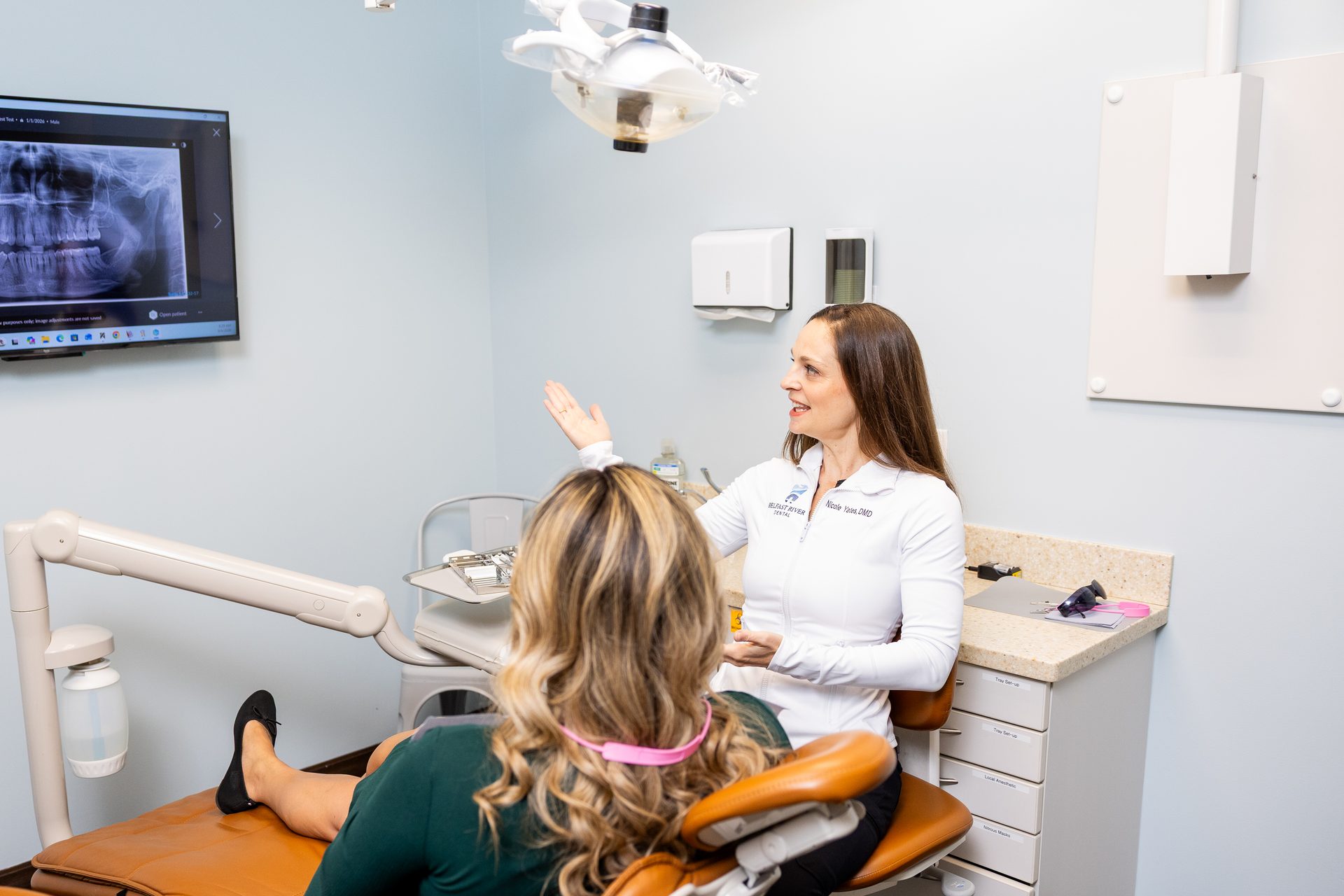
At Belfast River Dental, Dr. Nicole Yates handles the full process in this office, from the first consultation to the final crown.
Why Patients Choose Belfast River Dental for Implants
Real surgical depth
Dr. Yates is military-trained with 13 years of clinical experience. Her post-residency education focused on surgical services, implants, and bone grafting. She places implants and does the grafting herself, so the person planning your case is the person doing the work.
Everything in one place
Many offices refer out the surgical part and bring you back for the crown. Here, extraction, grafting, placement, and the final crown all happen at one address, with one team that knows your case.
Efficient, not rushed
We group treatment so you are not coming in for one small step at a time. When a step can be done the same day and you want it, we do it. Healing still takes the time it takes.
A complete plan, not a single tooth
Dr. Yates trained in a setting where every patient received the ideal treatment plan, and she still plans that way. You will see the whole picture, including what happens if you wait.
The Implant Process, Start to Finish
1. Consultation and planning
Dr. Yates examines the area, takes X-rays, checks gum health and bone volume, and reviews your medical history. You leave with a written plan: each step, your options, and the cost.
2. Extraction, if the tooth is still in place
A tooth that cannot be saved is removed here. Often, grafting material goes into the socket at the same visit to preserve the ridge.
3. Implant placement
The post is placed in the jawbone under local anesthetic. A few days of soreness and swelling is normal.
4. Healing
Over the following months, the bone fuses to the implant. That bond is what makes it strong enough to chew on for years. It usually takes a few months, longer if grafting came first.
5. Abutment and crown
Once the implant is solid, a small connector is attached and a custom crown is made to match your other teeth.
A note on timing
Some steps can be combined to save you visits. The healing cannot. Expect several months from start to finish, and a realistic timeline before you commit to anything.
When Bone Grafting Is Part of the Plan
An implant needs enough healthy bone to hold it. When a tooth has been missing for a while, or gum disease or infection has damaged the area, the bone shrinks. Grafting rebuilds that foundation.
It may happen at the time of extraction or as a separate step months before the implant. Either way, Dr. Yates does it herself in this office, so it adds time to your plan but not another provider. Read more about bone grafting and ridge preservation.
Alternatives to Implants, and Honest Considerations
Implants are not always the right answer.
A fixed bridge
A bridge uses the teeth on either side of the gap to hold a replacement tooth. It is faster and often costs less up front. The trade-off: healthy neighboring teeth are reshaped, and the bone under the gap keeps shrinking.
A partial or full denture
Removable, and usually the lowest cost to start. Dentures often grow less stable as the jawbone changes shape beneath them. A few implants can anchor a denture so it stays put.
Things to weigh
- Time. Implants take months, not weeks.
- Healing. Smoking, uncontrolled diabetes, and some medications can affect how bone heals. They do not always rule implants out.
- Upkeep. An implant cannot decay, but the gum and bone around it need daily cleaning and regular checkups.
The right answer fits your mouth, your health, and your budget. We will lay each option out plainly.
Cost and Financing
Cost depends on how many teeth are involved, whether an extraction or graft is needed, and the type of final restoration. Because so much varies, we do not quote prices online. After your consultation you will have a written estimate, broken down by step, before anything is scheduled.
We will help you understand what your dental plan covers. For the portion it does not, we offer CareCredit and Sunbit financing, and our membership plan helps patients without insurance keep routine care affordable.
Dental Implant FAQs
How long do dental implants last?
With good home care and regular checkups, an implant can last for many years, often decades. The crown itself may eventually need replacement from normal wear, the same way a natural tooth might someday need a new crown. Results vary from person to person.
Does getting a dental implant hurt?
The area is numbed with local anesthetic during placement. Afterward, a few days of soreness and swelling is normal, and most patients manage it with over-the-counter pain relievers.
Am I a candidate for implants?
Most healthy adults with a missing tooth can be considered. What matters most is gum health, available bone, and overall health. An exam and X-rays are the only way to know for sure.
Can implants replace all of my teeth?
Yes. Several implants can support a full set of fixed teeth, or a smaller number can anchor a denture so it no longer slips. The options differ in cost and complexity.
My tooth has been missing for years. Is it too late?
Usually not. Bone loss is common after a long gap, and grafting can often rebuild enough foundation for an implant. It adds time to the plan.
Missing a Tooth? Let’s Talk Through Your Options.
Call to schedule a consultation with Dr. Yates. You will leave knowing what your plan involves and what it costs.